Daeshin High School
Daejeon, South Korea
Rooted in tradition.
Reimagined with iPad.
At Daeshin High School, the rigorous academic standards haven’t changed in 50 years. But in 2022, the school made a historic shift — committing fully to iPad. For an institution grounded in academic excellence, the change was no small feat.
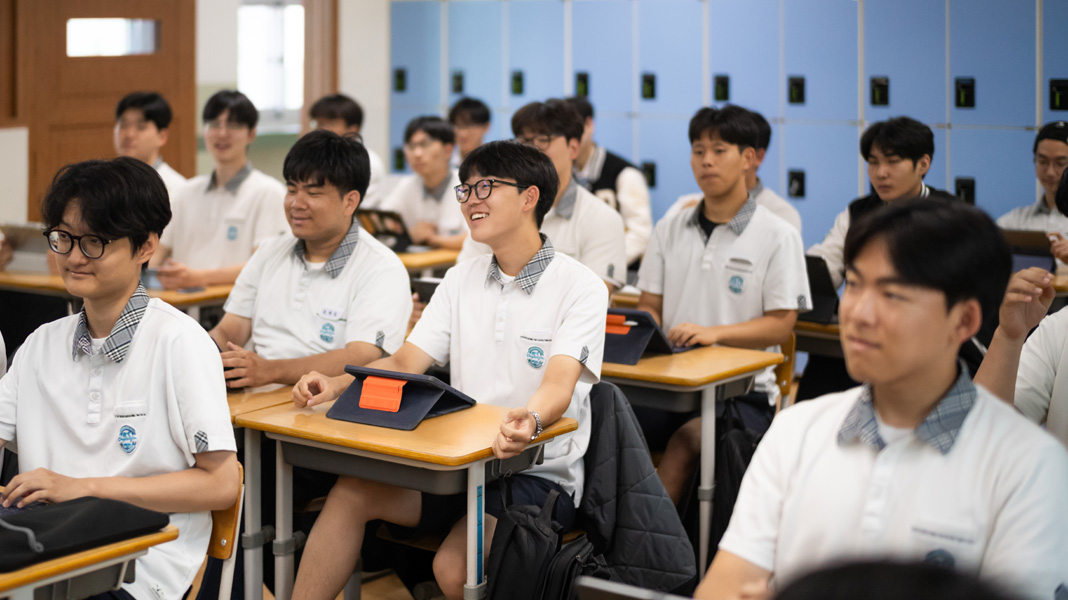
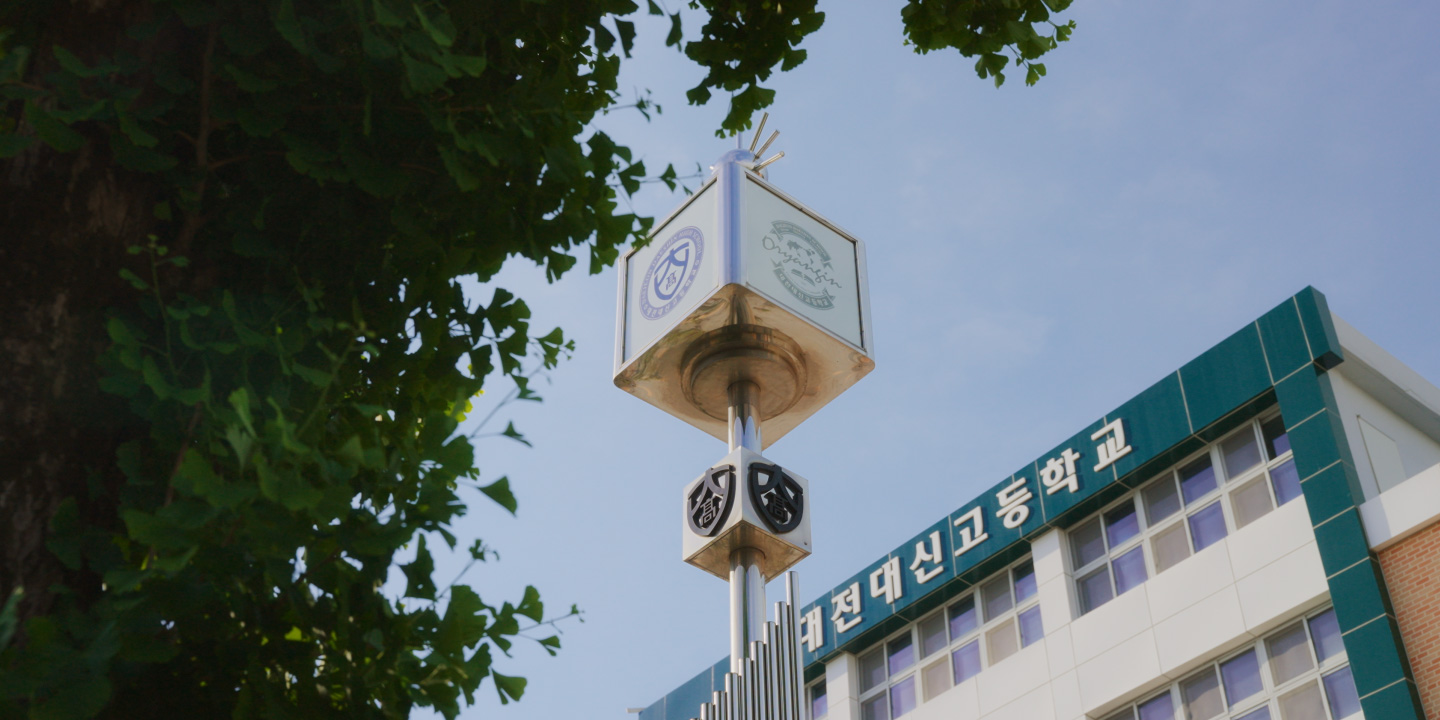
Founded in 1973, this all-boys school sits on a green ridge with forested mountains at its back, overlooking Daejeon, South Korea’s “science city.” Its large track-and-field complex and soccer pitch are rarely empty. With many students boarding on campus, the energy stays high, even after the last bell rings.
That shift didn’t begin as a technology plan. It began with a question. When COVID-19 kept students home, then-Vice Principal Songkyung Joo — now the school’s principal — kept asking how to keep learning alive. “iPad wasn’t the goal,” he says. “It was a tool for solving a problem.” That led Daeshin to a deliberate choice: commit fully to iPad and rebuild its teaching approach.
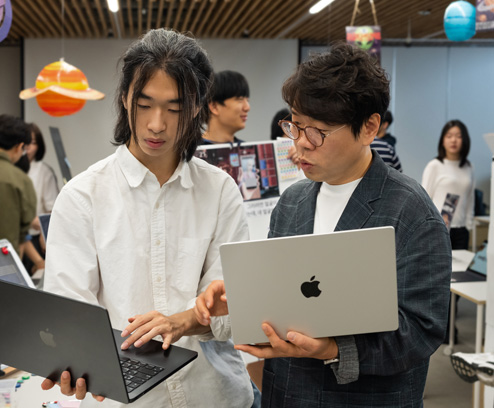
History teacher Taejun Jang admits he didn’t want to change at first. “It’s in my personality to push back against new things,” he says. But when devices reached every teacher and student, he decided the only way forward was to start fresh, learning alongside his students. “You can’t stop the environment from changing,” he says. “If I don’t move, I can’t change with my students.” Four years later, his verdict is simple: “I’m very satisfied.”
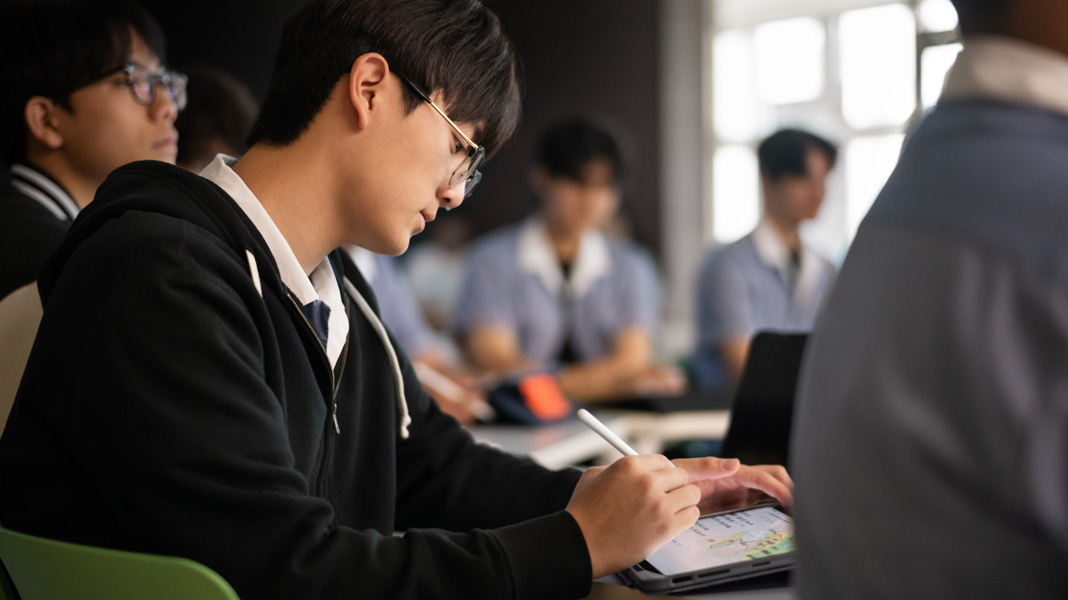
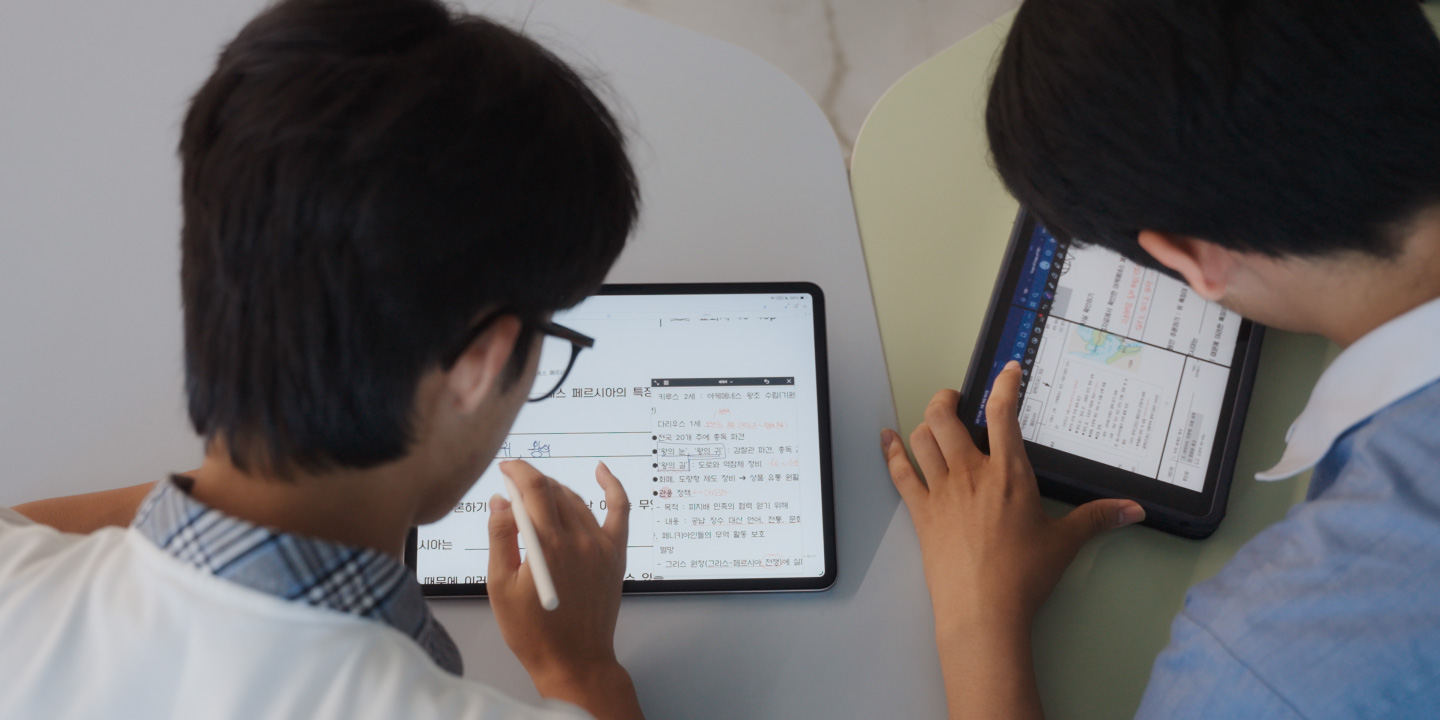
Today, history class at Daeshin looks nothing like it used to. Jang’s students don’t just study the past — they interpret it. On any given day, they could be composing a song about a historical event in GarageBand, laying out a newspaper in Pages, or governing the ancient Persian Empire in Numbers — all on iPad. “History could be a rigid, boring subject,” Jang says. “Now it’s a class that students can express themselves in.”
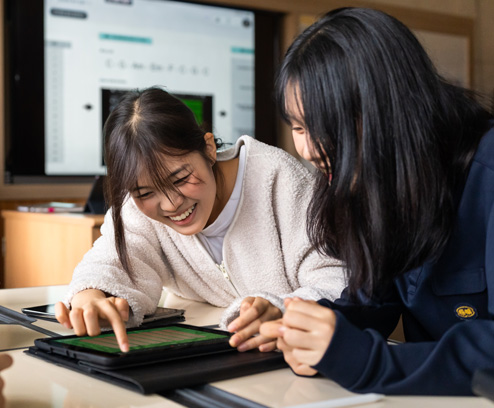
That’s been the case for every subject. Music teacher Seongjong Kim builds every worksheet in Numbers, embedding video and audio directly into the files. “Things I couldn’t do on paper before now make teaching so much more convenient. I think of Numbers as a digital textbook,” he says.
On paper, learning materials were easily discarded. With iPad, everything accumulates — like a portfolio. Students build up their learning, look back on it, and use it as a foundation for the next thing.
Across campus, students storyboard, film, score, and edit short, five-minute films in iMovie for their independent filmmaking class. In wood shop, they design custom shelving in SketchUp with Apple Pencil, then cut plywood to match — working straight from their 3D model.
That versatility is the point. “Students can express their thinking more concretely across a range of apps,” says Sunkyu Kim, the school’s IT and digital lead — “and as an added benefit, it’s made their backpacks much lighter.”
-

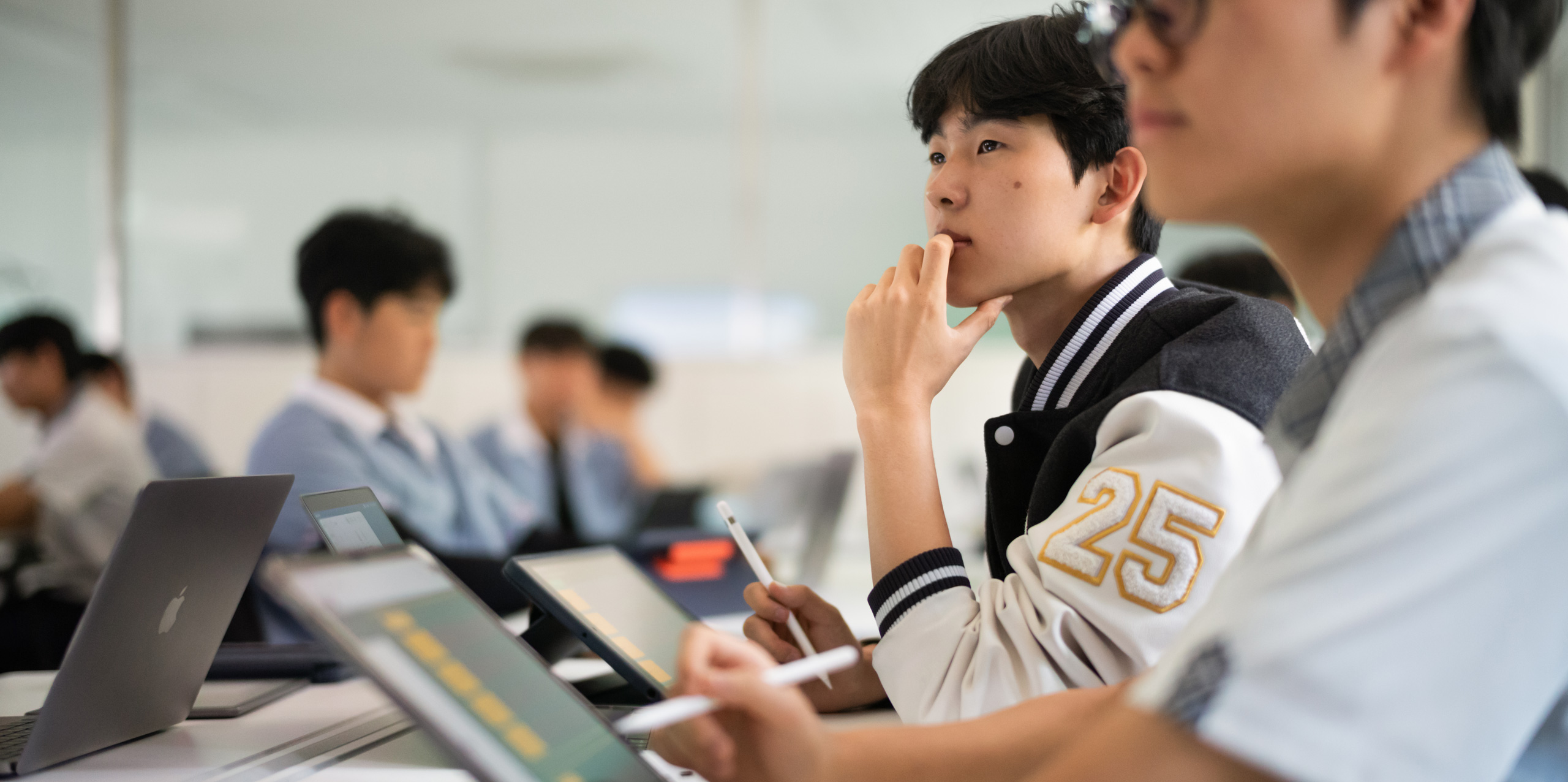
Across every subject, students use iPad to demonstrate learning in their own way. -
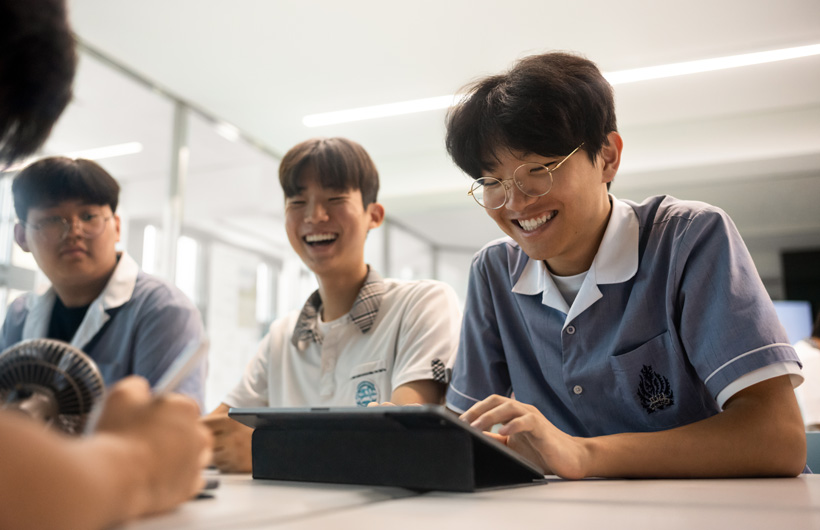
The same apps are used across classes, so a skill students build in one subject carries into the next. -
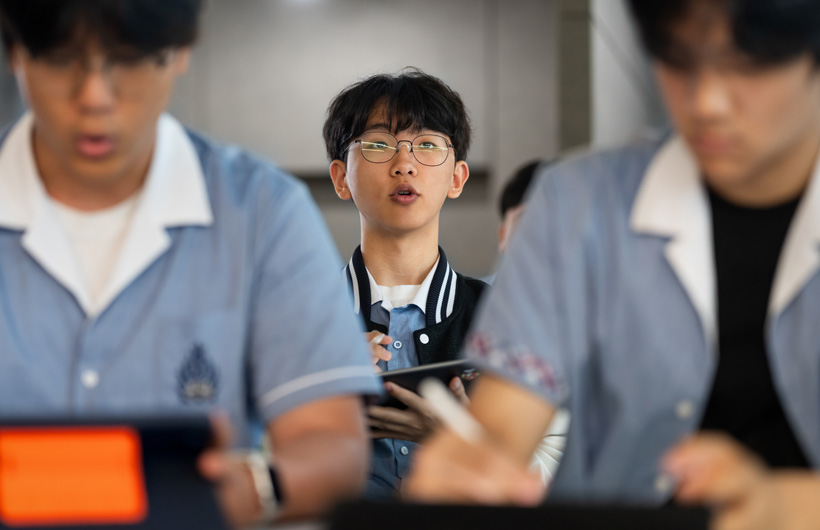
Where paper once got tossed, students’ work now stays — creating an archive they can build on. -
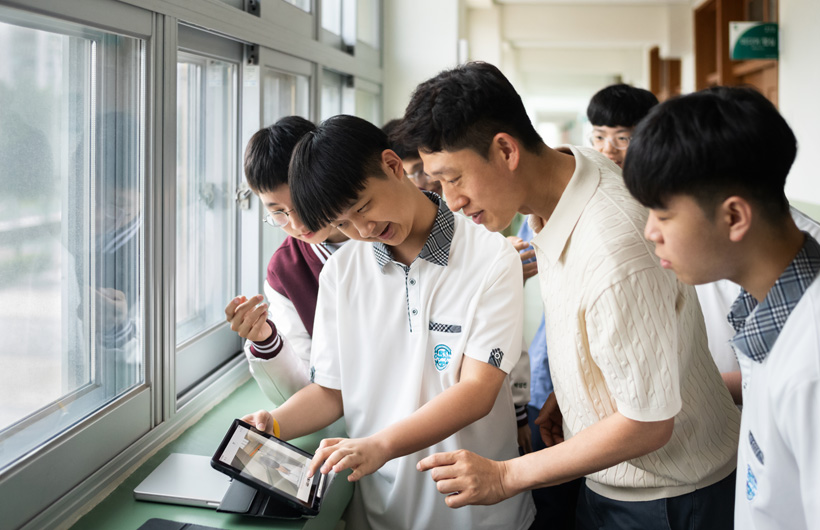
Over time, that work becomes the portfolio students bring to their university applications.
Behind the shift is a deliberate approach. Daeshin’s 20-teacher iPad research group, chaired by Seongjong Kim, has worked to develop and share new ways to teach with it, so learning goes deeper and leaves a lasting record. The momentum wasn’t only top-down — students took to iPad so fluently that their example pushed more teachers to bring it deeper into their own classes.
Good activities have to be the foundation. Schools that record their students’ activities and competencies well can prepare them for portfolio-based admissions. What makes those activities possible is iPad.
Daeshin High School
That philosophy has real stakes in South Korea, where university admissions are increasingly evaluating student portfolios alongside test scores for a more holistic view. The student-led projects and creative work iPad makes possible become the very entries that fill that portfolio — and universities have begun to regard Daeshin’s approach favorably because of it.
“Classrooms are becoming more interactive and student-centered,” says Kyunghee Lee, an Education Supervisor at the Daejeon Metropolitan Office of Education. “As opportunities for discussion, presentation, creation, and collaboration expand, teaching and learning are shifting toward greater student agency and engagement.”
And they’re seeing it pay off. Daeshin students have earned places at universities across South Korea, including Seoul National, one of the country’s most selective universities. Their portfolios are built entirely on iPad, using apps like Keynote, Pages, and Numbers, with presentations, surveys, and research all archived in iCloud.
Principal Joo sees it as bigger than any one device. “Over these four years, iPad has been more than a learning device — it’s acted as a catalyst,” he says. “Our teachers came to embrace digital teaching naturally, and it triggered far bigger change than I expected.”
At Daeshin High School, the standards haven’t changed, but the tools have. Now every lesson and project builds on the last, motivating students to take them further. And in an increasingly competitive environment, that momentum is their advantage.